

Startup Scouting in 2021: Delegate, Automate, Arbitrate
Now that large companies (but not only) have assimilated the imperative to place innovation at the heart of their strategy, they are increasingly turning to startup ecosystems (and more widely to innovative organisations). The criteria for engagement with startups are becoming more and more precise and nuanced, and the current tools and methodologies may not be up to the challenge. It's time to start startup scouting and scout innovations as in 2021 - and beyond.
50% of the Fortune 500 companies will be replaced over the next 10 years. That's more than Shumpeter had envisioned. Companies have understood the message, and more than 80% of corporations believe that collaborating with startups is a business imperative - if not a matter of survival.
Why exploring startup ecosystems? Some use cases are obvious (M&A, Corporate VC), and other ones are emerging as more and more clients use the Novable scouting technology, like:
- Strategy teams monitor their environment, not only the competition, but specific domains or technologies that might impact the business course.
- They also get inspired by innovative and surprising initiatives in their fields.
- Investment or venture capital funds monitor the environment of each company in their portfolio, in order to anticipate both opportunities and upheavals, and provide their startups some useful insights during board meetings.
- Innovation managers or entrepreneurs run background checks of their ideas (as most of the time, ideas already exist).
- Companies turn to startups to test a new product, a new technology, a new business model before investing heavily.
- More and more, purchasing managers rely on startups to find innovative solutions to new problems raised by business units.
- Overall, it's the best way to import creativity, agility, innovation culture and pace in a corporate environment.
Implement innovation in the supply chain
Now, to get the most out of those use cases, you need to ensure a proper innovation supply chain able to encompass details and nuances of your strategy and needs. Once very useful, current methods have strong limitations and can no longer respond to today's business developments worldwide:
Startup databases are one-size-fits-all. Tools like Crunchbase or Pitchbook are great data sources for accessing a very large number of startups. Downsides: they focus on financials and firmographics (rather than actual activity), they retrieve one-size-fits-all results (with a search made using keywords and taxonomy), they have lots of errors and outdated data (startups are evolving and dying quickly), and they don’t replace the need for you to run your own research behind each result line. They are forward-based tools.
Network-based channels are time-consuming and low-reached. Companies host or attend startup events to attract or browse startups in their interest areas. They can also be fed with startups through various ecosystems (such as incubators, accelerators, angel networks and schools). Downsides: reach is limited by design, and these events require lots of energy, money and time.
Consultants are expensive. Companies also delegate to specialised consulting firms or scouting consultants (rather like headhunters for startups) to increase the quality level of startups to analyse. Downsides: manual work is very expensive with a limited reach.

In 2021 and beyond... 5 key statements
In 2021 and beyond, both data and technology are available to finally conduct startup scouting activities in a modern and efficient way. Artificial intelligence (data science in general, natural language processing in particular) is now everywhere - why couldn't it also be used for corporate venturing initiatives?
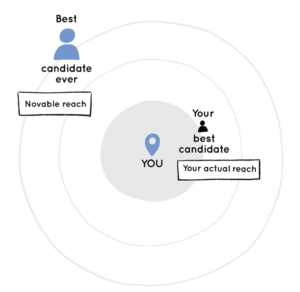
- In 2021 and beyond, you don't use mere data only. You delegate by leaving the computer do the tedious tasks for you. You leverage an intelligence on top of data. The machine is smarter than you, much faster, never out, never off, never sick, never tired, and has a much broader reach than anyone.
- In 2021 and beyond, you don't browse long lists of startups anymore, and you stop spending hundreds of hours analysing bad candidates to eventually disqualify them. You automate by giving a briefing to the computer and let it have the right startups coming your way.
- In 2021 and beyond, you don't start with firmographic criteria. The startup activity comes first. You scout from the ground-up, for real world achievements, not for figures or headquarters. You switch from "tag" or "keyword" to "semantic proximity".
- In 2021 and beyond, you stop loosing time engaging with startups that will eventually be disqualified for a reason you could have identified earlier. The machine scouts, identifies, prequalifies, pre-checks and pre-vets for you. You arbitrate.
- In 2021 and beyond, you take the best of both worlds and demand high-quality results delivered by the smart combination of AI and human expertise. You hire your Artificial Consultant.
These are our suggestions for the years to come.

.png)
.png)