

VivaTech 2026: What Innovation Leaders Should Take Back to the Office
165,000 visitors with hundreds of stages running simultaneously. VivaTech is a celebration of European tech ambition, a networking marathon, a sensory overload, but for anyone responsible for innovation inside a large organization, it can also be deeply frustrating. Between the keynotes, the side meetings, and the relentless flow of startup pitches, it's difficult to step back and ask the only question that actually matters: so what does this mean for how I run my innovation agenda?
We spent last week at VivaTech doing what we do every day - watching what the best startups are building, listening to what the most sophisticated corporates are looking for, and trying to find the signal beneath the noise. Here's what we took away.
Agentic AI crossed the line from demo to deployment
If 2024 was the year everyone talked about AI, and 2025 was the year everyone piloted it, 2026 is the year the gap between leaders and laggards starts to compound. At VivaTech, the most interesting AI companies weren't selling a chatbot or a copilot. They were showing autonomous systems that handle multi-step workflows, procurement analysis, regulatory monitoring, R&D literature review, with minimal human intervention.
For innovation leaders, the implication is uncomfortable. The question becomes more than an AI integration question. It's whether your current scouting and partnership pipeline is moving fast enough to find the right solution before your competitors do. The startups doing genuinely differentiated work in agentic AI are already selective about who they partner with. First-mover relationships will matter.
Europe's deep tech moment is real, and fleeting
Defense tech, quantum computing, advanced materials, space infrastructure. At VivaTech this year, these weren't fringe conversations. They were main stage where European sovereign ambition is translating into venture capital, actual commercial contracts, and actual startups with revenue.
What struck us most was the caliber of founding teams. These are not first-time entrepreneurs chasing a trend. They're scientists, ex-defense engineers, and domain experts who have spent years building proprietary IP. They don't need validation, they need the right industrial partner. If your organization touches energy, infrastructure, manufacturing, or national security and you haven't mapped the European deep tech landscape recently, you are operating on an outdated picture.
The best startups are choosing their corporate partners
This one is worth sitting with. The power dynamic in open innovation has shifted more than most corporate innovation teams have fully registered. Laurent Kinet, Novable’s co-founder spoke about Innovation Theater on that topic. The most credible early-stage startups at VivaTech, the ones with traction, real IP, and multiple enterprise customers, are turning down partnership conversations that don't feel strategic. They've seen what happens when a large corporation "pilots" them for nine months and then does nothing. They're asking hard questions before they say yes.
This means the quality of your intake process, your speed to decision, and your reputation as a corporate partner now directly affect which startups will work with you. Open innovation has always required internal buy-in. Now it also requires external credibility.
What Novable was doing at VivaTech?
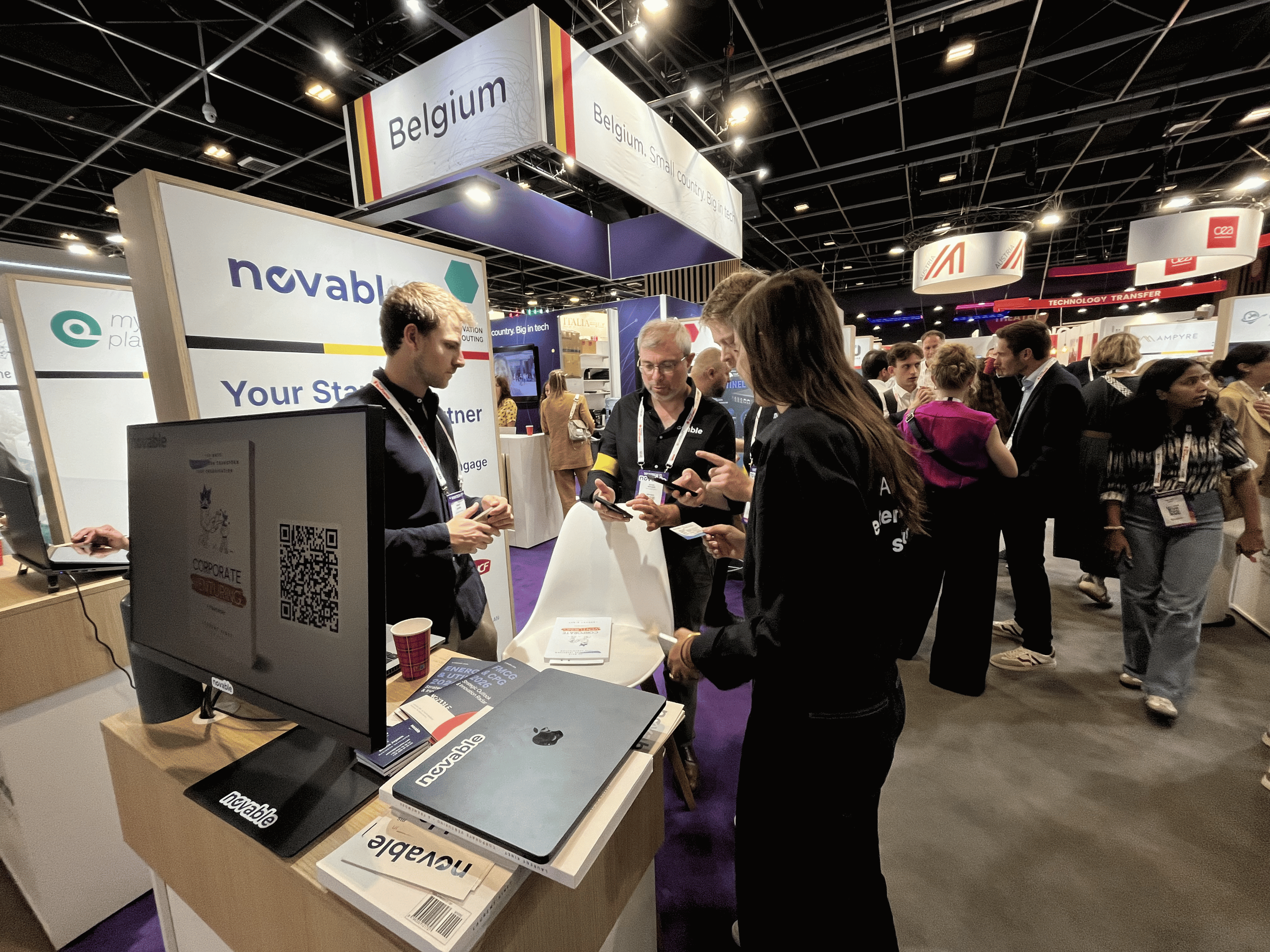
We were there, as we are every year, because events like VivaTech are one of the best places to stress-test our scouting intelligence against reality. Does what we see in the startup ecosystem actually match what innovation leaders inside large organizations are experiencing on the ground? The answer this year - mostly yes, with one important nuance, the demand for speed and precision in scouting has accelerated significantly.
Olivier Beaujean, co-founder and CEO of Novable, had dozens of conversations over a few days in Paris. Here's his take on where we are and what Novable brings to the table for French and European corporates right now:
VivaTech is useful for taking the temperature of the ecosystem. But temperature alone doesn't tell you what to do next. The innovation leaders we spoke to who left Paris with the clearest sense of direction were the ones who came in with a specific question, a technology domain to validate, a partnership hypothesis to test, a capability gap to fill. A general intent to "see what's out there" is not an option.
If VivaTech surfaced questions you don't yet have answers to, that's actually the best outcome. The worst outcome is leaving with a long list of business cards and no framework for what to do with them.
We're happy to help think through what the right next move looks like for your organization.
.png)
.png)
.png)